
Report From the Real World: Dispatching LEO Technology in Response to Earthquakes in South America
Aug 25, 2026
“Satellite connectivity plays a critical role in the aftermath of a natural disaster like this one. This was an immediate way for us to contribute to the ongoing disaster recovery efforts with our partners on the ground, and we’re honoured to support Venezuelans as they work to recover and rebuild.”
– Telesat Chief Commercial Officer Glenn Katz following Venezuela’s summer 2026 earthquakes
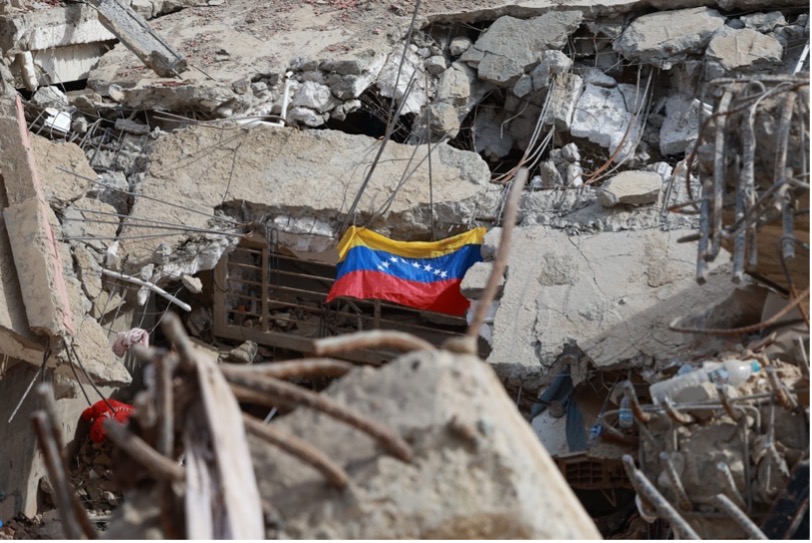
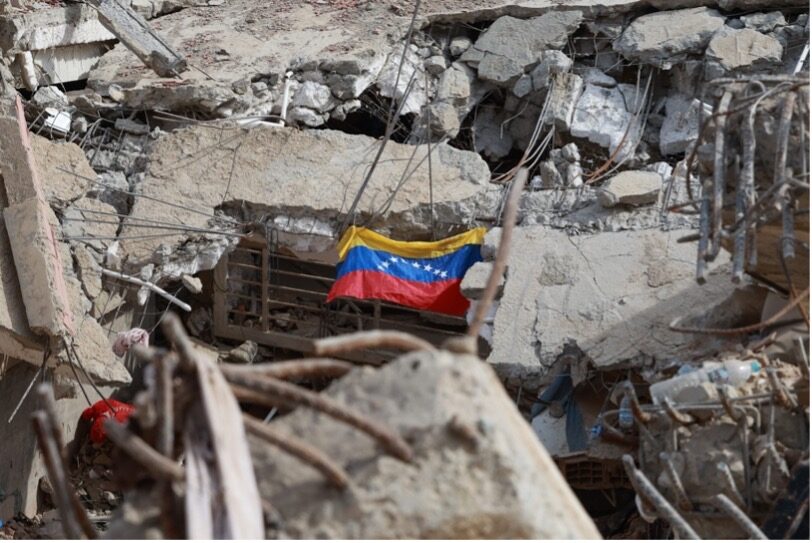
A close-up of a Venezuelan flag on a collapsed building following the earthquake in La Guaira, Venezuela, on July 8, 2026. (Javier Campos/NurPhoto via Reuters)
When disaster strikes, communication systems are an essential part of staying safe, connected and informed. However, natural disasters like earthquakes, tornadoes and hurricanes often leave critical communication infrastructure damaged or destroyed. This is where we’re seeing low Earth orbit (LEO) satellite technology provide real-time, emergency communications for first responders and communications impacted by disaster.
After Venezuela and Colombia were struck by the strongest recorded earthquakes the countries have experienced this century on June 24, 2026, and August 10, 2026, respectively, both countries faced significant internet and connectivity loss — with more than 30 percent of Venezuelans left without connectivity.
In response, satellite operators and internet service providers donated satellite connectivity to those who needed it most to support disaster response efforts. These efforts were aimed at combating the earthquakes’ devastating effects, which resulted in the loss of thousands of lives, destroyed survivors’ homes and left friends, families and emergency responders with an urgent need for communication technology.
In Venezuela, the U.S. State Department cost-free Starlink satellite internet was dispatched across the most affected areas for new and existing customers. The satellite operator Telesat also donated satellite capacity to a local telecommunications company to support emergency coordination, while local mobile operators like Movistar activated Starlink’s direct-to-device satellite service. LEO satellite-based internet connectivity was also provided in Colombia as the “fastest available redundancy layer” to help those affected by the disaster.
Share your internet connectivity and LEO use case story here.
Learn more about the Connect Everyone Coalition here.